

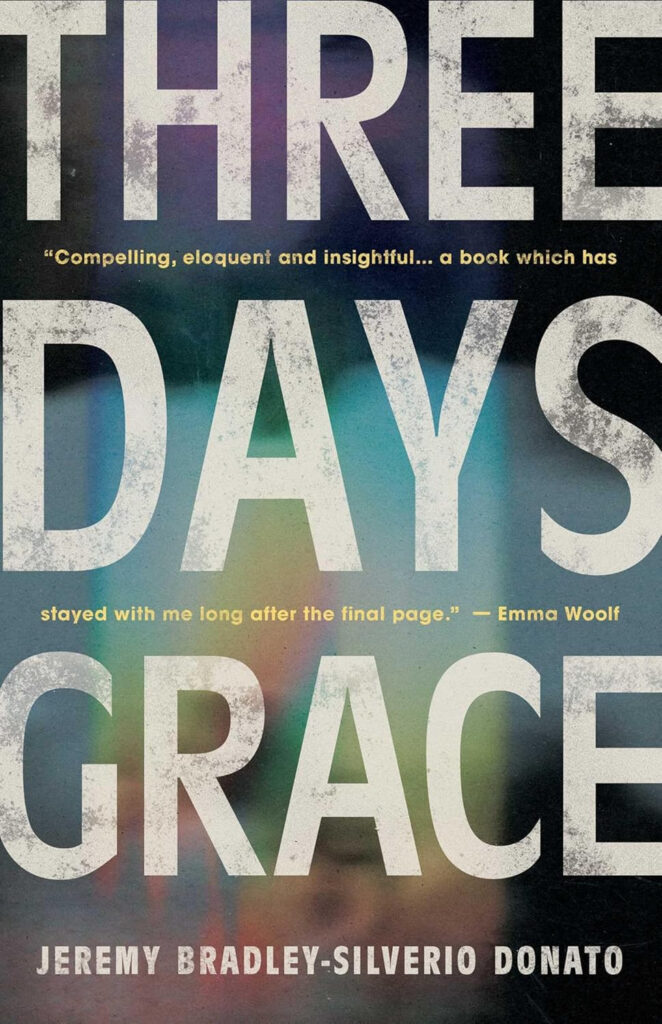
 The collision of five lives during a reunion in Paris threatens to unravel them all in Three Days Grace by Jeremy Bradley-Silverio Donato, a probing look into the painful fallout of broken families – chosen or otherwise.
During a brief stopover in the City of Lights to visit her son and catch up with old friends, Lynne and her wife, Susan, must navigate a minefield of intimacy after receiving word of a tragic death. Lynne begrudgingly breaks the news to her son Nick that his father has died, opening the floodgates of pent-up memory, while drawing two other old companions – Marc and Laslo – into their tight circle of familial grief.
What starts as an opportunity for new patterns and redefined relationships becomes a bitter embrace of the heartbreaking past and a return to buried hardships, along with dark revelations of deception, incalculable trauma, and the inherent violence of turning a blind eye. A combination of edge-of-your-seat awkwardness, stomach-churning conflicts, and relentless intensity makes this a jaw-dropping portrait of emotional processing.
The core characters are remarkably sculpted in terms of depth and complexity: Lynne, self-deprecating and quietly grieving the death of the past; Susan, her assertive and suspicious wife; Nick, an expat struggling to escape his mother’s shadow; Laslo, the disaffected, disarming and calculating Parisian painter; and Marc, a flirtatious collector of secrets clinging desperately to an illusion of himself that no longer exists.
Through rich prose that feels both urgent and effortless, readers are welcomed into each of these characters’ wounds and defense mechanisms, their insecurities, eccentricities, and taboo desires. The maternal dynamic between Lynne and Nick often takes center stage in the drama, but the symbiotic bond she shares with Marc and the fragile balance of her marriage are equally strong areas of narrative depth. Unexpected divides and grief-driven bonds reopen old wounds and create essential connections, as their presence in one another’s lives acts as a reminder of truths they might prefer to ignore.
Donato encapsulates the emotional mood of the entire story early on, in his description of the unusual connection between Susan and Laslo: “They began talking not just about feeling but about frameworks—family wounds, personal myths, the psychic sediment of old desires.” This willingness to lean into emotional deep-diving is what keeps the pages brimming with the tension of unspoken confessions and jarring revelations.
Woven into the casual celebrations and conversations during these three days are a myriad of nuanced themes, with the characters facing the grim realities of emotional betrayal, the fallibility of friendship, the permanent scars of grief, and the visceral release of long-buried resentment. Cultural divides and lifestyle alignments are challenged and explored with sensitivity, particularly the narrative elements centering on the hedonistic highs and crippling lows of the queer experience. Issues of abuse, sexual violence, personality disorders, repression, and suicide add to the relevance and evergreen potency of this standout novel.
On a technical level, the prose is practically spotless; every line feels purposeful and patiently considered, from the casual brushing of fingertips and the exchange of hurried glances to backhanded comments and painfully acerbic passive-aggression. Imbued with a sense of creeping dread that is expressed with lyrical ease, this exceptional novel is a blunt-force and extensive portrait of human nature.
Available At










Leave A Comment