

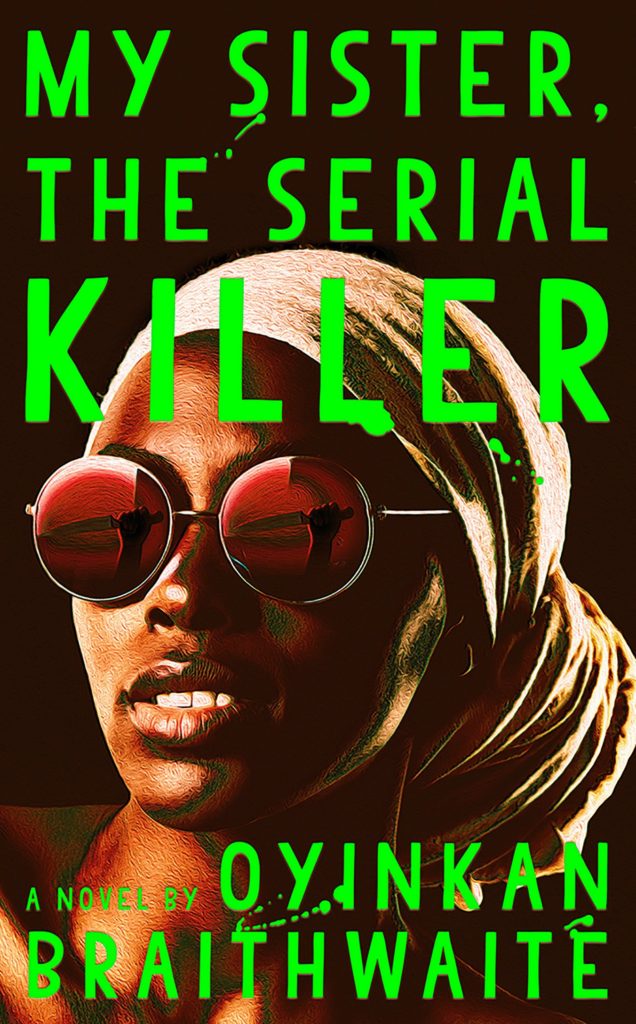
 Oyinkan Braithwaite’s debut novel is all fizz and pulp in the chick reads section, and yet it also bubbles with a bloody humour that lifts it out into its own hybrid of Nigerian comedy and crime. The perils of sisterhood are examined where blood is thicker than water, as Korede the nurse struggles with her sister Ayoola’s serial killing habits in a sweaty middle-class Lagos. But when Ayoola takes a fancy to Tade, a doctor that Korede has a crush on, her fidelities start to fray.
Funny and smart in places, Braithwaite has drawn on many original threads to produce a promising piece. However, it has to be said that the book loses some of its movement in the third act. While the reader may wait for something of a conclusion, the book carries on past the pages and may leave the feeling that Braithwaite could have afforded just a few more scenes to really tie up her ends in the same detail she did in the first and second parts, and therefore the book is top heavy in many ways, as it canters into a vague few conclusions before presenting yet another repeated scenario.
The writing is also a little too plain and open, it seems the current trend for zapping all adjectives and superfluous phrasing has been practised with vigour here, and it’s not always a success. Maybe the author’s intention was to write super clear prose and keep it simple, but at times her storytelling suffers from it, which is a shame, because it does not always match her imagination’s rich palette.
For example, it’s not clear how Lagos looks and feels beyond a few well-placed dishes in the home kitchen, and it doesn’t shine through that we are in Nigeria, and the differences between middle-class and working-class were not very clear at times. Having never been to Lagos, it was difficult to imagine those details while reading the story, and the cultural references didn’t really shine through. They could have done with some attention to detail for those who don’t know what it’s like to be a woman in Lagos.
However, this debut does show that Braithwaite is one to watch, and her next novel should be something of an event worth digging into.
Available At


Leave A Comment